


Oasis
Mixtiles
I approached Oasis as a practical home-control app rather than as something designed to entertain or fill spare time. Its purpose is narrow but useful: it helps you control various Oasis products from a mobile device. That focus matters, because the app makes the most sense when you already own compatible Oasis hardware and want a simpler way to interact with it.
In everyday use, I found the appeal easy to understand. Instead of treating each product as a separate object around the house, the app gives you one place to manage the Oasis equipment connected to your routine. The experience is less about discovering a huge catalog of tools and more about reducing small points of friction at home. If you are looking for a broad smart-home platform, this is not that kind of product. If your household already uses Oasis products, however, the focused approach can be much more relevant.
What Oasis actually offers and what it costs
Oasis is a free House & Home app from Mixtiles. It is available for everyone, and the current release is version 2.8.0, with support beginning at Android 7.0. Those details make it approachable for people using older Android phones, while the free price removes the most obvious barrier to trying it.
The important distinction is between free access to the app and the value of the products it controls. Installing Oasis does not, by itself, turn a phone into a complete home-management system. Its usefulness depends on having Oasis products that can work with it. In other words, the app is free, but the surrounding hardware is the part that determines whether the experience is worthwhile for you.
I appreciate that separation because it prevents an unrealistic expectation. You are not downloading a free collection of unrelated home utilities. You are getting a companion for an Oasis product setup. For someone who already owns that equipment, the app can add convenience without another app charge. For someone who does not, the download alone offers little practical value.
Related News

Why WhatsApp Messenger Still Makes Everyday Communication Feel Easy

Jurassic World: The Game Is the Better Dino Tycoon for Strategic Players

Threads in Real Life: Who Should Join, Lurk, or Leave

How SHEIN Turned Shopping Into an Endless Content Feed

How to Make Fortnite Feel Smarter on Mobile

Should You Switch to Microsoft Outlook on Mobile?
The app was released on May 8, 2025, and it has built a 4.9 average from around 187 ratings, alongside 48 written reviews. It has also passed 10,000 installs. Those figures suggest that the people who find it are responding positively, but they should be read in context: this is a focused companion app, not a mass-market platform used by every type of household.
That smaller scope is neither automatically good nor bad. A specialized controller can be easier to understand than a crowded smart-home dashboard, but it also gives you fewer reasons to open it if you do not use Oasis equipment. I would judge it by how well it fits your existing setup, not by comparing its download count with general-purpose home apps.
The first setup question is compatibility
Before installing it, I would start with a simple question: do you own an Oasis product that the app is intended to control? If the answer is yes, Oasis is worth trying because the app is free and the purpose is clear. If the answer is no, I would skip the installation until there is a concrete product need. This is one of those apps where ownership context matters more than curiosity.
Gallery
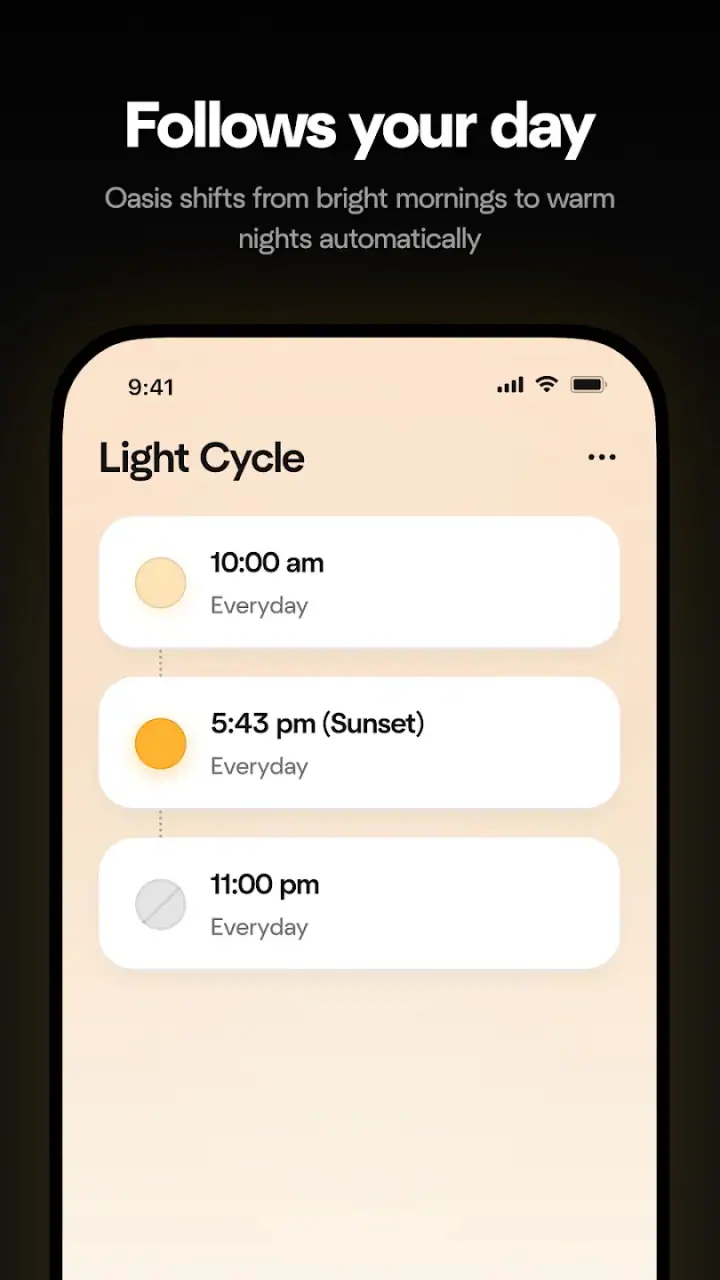
I would also keep the phone's operating system in mind. Android 7.0 compatibility is helpful for older devices, especially if your home-control phone is not your newest handset. That can be useful when a family keeps a spare phone in a shared area or uses an older device as a dedicated controller. It does not guarantee that every individual hardware combination will feel equally smooth, but it lowers the software entry point.
Another sensible step is to install it with one specific task in mind. Rather than opening the app expecting a complete overview of your home, decide what you want to control and where you expect to use the app. This makes it easier to tell whether Oasis is genuinely saving time or simply adding another icon to your phone.
How the value appears in real home routines
The strongest value comes from repeated, small interactions. Imagine coming home after work and wanting to adjust an Oasis product without walking around the house to find a physical control. A phone-based controller can make that moment more direct. The same applies when you are already settled in another room and need to manage the product connected to your routine.
I see particular value for households where more than one person needs access. A shared physical control can be misplaced, left in another room, or unavailable when someone else is using it. A mobile app gives each authorized user a familiar interface on a device they already carry. I would still consider the household's habits, though: if everyone prefers physical controls, an app may not improve the experience as much as expected.
There is also a useful distinction between occasional control and dependable daily control. For occasional adjustments, a companion app can be a welcome convenience. For something you operate constantly, the quality of the opening flow, device visibility, and control response becomes much more important. A few extra taps may be harmless once a week but irritating several times a day.
One practical workflow I would recommend is to keep the app in an easy-to-reach location on the phone rather than burying it in a folder. That sounds minor, but a controller earns its place by being quicker than the alternative. If opening it requires searching through several screens, the convenience advantage starts to disappear.
A second useful habit is to decide who in the household actually needs access. Giving every person the same responsibility can create confusion if people are unsure which Oasis product they are changing. A smaller, clearer routine—such as one person handling setup while others use the controls—may be easier than treating the app as an informal control center for everything.
A third insight is that the app's narrow purpose can be a strength when you want less clutter. General smart-home apps often combine lighting, security, appliances, routines, notifications, and third-party devices. That breadth is valuable for mixed ecosystems, but it can also make simple actions feel buried. Oasis is more appealing when you want a product-specific route instead of another dashboard competing for attention.
Where the focused design helps
Because the store summary describes Oasis as a way to control various Oasis products, I would not expect it to replace a complete home automation system. Its role is more modest: it connects your mobile routine with the Oasis equipment you already use. That can be exactly what you want if you prefer a limited tool that does one job without asking you to reorganize the rest of your home.
This focus may also make the app easier to explain to another family member. You do not need to present it as a complicated automation platform. You can describe it as the phone app for controlling Oasis products. For households that avoid complicated technology, that plain purpose is a real advantage.
At the same time, the focused design means I would not choose Oasis as the foundation of a new smart-home ecosystem. If your priority is combining products from many manufacturers, controlling everything from one universal interface, or building elaborate routines across different categories, a broader platform would be a better fit. Oasis should be evaluated as a companion, not as a universal replacement.
The trade-offs I noticed
The main trade-off is dependency on compatible hardware. A free controller is valuable only when it controls something you own and use. This makes Oasis less useful as a standalone download than a general home-planning, shopping, or maintenance app. It also means that your satisfaction will depend partly on the products around it, not just on the app itself.
Another trade-off is the phone-versus-physical-control question. Phones are convenient because they are personal and usually close by, but they can also be locked, charging, misplaced, or being used for something else. A physical control may remain faster for a single repeated action. I would keep both options in mind rather than assuming the app automatically makes every interaction better.
There is a similar trade-off between specialization and flexibility. Oasis can be easier to understand because it is tied to Oasis products, but that same specialization limits its usefulness outside that family. Someone building a mixed setup may end up switching between several apps, which removes some of the simplicity that a smart-home controller is supposed to provide.
The app's high average rating is encouraging, but I would not treat it as proof that it will suit every household. Ratings often reflect the experience of people who already have a reason to use the product. If your expectations are centered on broad compatibility or advanced automation, a positive score from existing Oasis users may not answer your particular question.
There is also a practical maintenance consideration. A companion app needs to remain available and usable alongside the products it supports. Keeping your phone's software reasonably current and checking that the app remains installed on the device you actually use can prevent avoidable frustration. I would not rely on an old spare phone without first making sure it is comfortable to operate and suitable for your household routine.
Who will get the most from it?
Oasis is best for people who already own Oasis products and want mobile control without paying for a separate app. It is also a sensible choice for households where several people need access, where the physical control is not always nearby, or where a phone is already the preferred way to manage home equipment.
I can also see it working well for someone using an older Android device as a dedicated home controller. Since the minimum operating system is Android 7.0, the app does not force every user to have a recent phone simply to try it. That may be useful for a shared household device, provided the device is kept in a convenient place and the person using it is comfortable with the interface.
The app is less suitable for someone who is only researching home products, someone who does not own Oasis hardware, or someone who wants one application to control a wide range of unrelated devices. It is also not the first choice for a user who strongly prefers tactile controls and rarely wants to unlock a phone for a basic adjustment.
If you are choosing between Oasis and a general smart-home app, I would make the decision based on ecosystem rather than features on paper. Choose Oasis when your equipment is centered on Oasis and you want a direct companion. Choose a broader alternative when your home already contains products from several brands and consolidating them matters more than keeping the controller specialized.
Questions I would settle before relying on it
The first question is whether the app works with the exact Oasis product you own. Since its purpose is to control various Oasis products, I would identify the product model before making the app part of a daily routine. That avoids installing it with a vague expectation that every Oasis item will automatically appear.
The second question is whether the app is useful for everyone who needs it. If a household shares control, test the routine with the people who will actually use it. An app can be technically suitable yet inconvenient if family members cannot quickly find the right product or prefer a physical control.
The third question is whether free access is enough for your intended use. The app itself costs nothing, which is a clear advantage, but it does not remove the cost or practical commitment of the Oasis products it supports. I would separate the decision to download the app from the decision to buy hardware.
The fourth question is whether you need a broader system. If you want cross-brand control, complex household scenes, or one dashboard for many categories, Oasis may feel too narrow. Its value is strongest when its limited scope matches your equipment rather than when you expect it to become a universal command center.
My final recommendation
I would recommend Oasis to an existing Oasis product owner who wants a free, focused way to control that equipment from Android. The app's clear purpose, accessible operating-system requirement, and strong user response make it an easy companion to try. For that audience, the lack of an app charge is meaningful because it adds convenience without creating another software purchase.
I would skip it if I did not own compatible Oasis products, and I would look elsewhere if my main goal were to combine several brands under one home-control system. The app is not trying to solve every smart-home problem, and judging it as though it were a universal platform would be unfair to its actual role.
My bottom line is simple: Oasis delivers the most value when it removes a small, repeated inconvenience from an Oasis-based home setup. It is a practical companion rather than a complete home-management solution. If that distinction matches your situation, the free download makes the decision low-risk. If it does not, the app is unlikely to justify space on your phone.
FAQs for Oasis
What is Oasis and what can I use it for?
Oasis is an app designed to provide a focused digital experience, although its exact tools and purpose may depend on the version available on your device. Before downloading, review the store description carefully to confirm whether it matches your needs. Check the screenshots, supported features, developer information, and recent updates so you know what to expect from the app.
Is Oasis free to download and use?
Oasis may be available as a free download, but some features can require in-app purchases, a subscription, or a premium upgrade. I recommend checking the pricing section in Google Play or the App Store before installing it. Also look for information about free trials, recurring billing, advertisements, and refund policies to avoid unexpected charges after activation.
Does Oasis require an internet connection?
The connection requirements depend on which Oasis features you use. Basic screens or previously stored information may work offline, while account synchronization, online content, updates, cloud storage, or interactive services may require Wi-Fi or mobile data. If reliable offline access is important to you, verify the app’s current description and test its main functions before depending on it.
What permissions and personal information does Oasis request?
Before installing Oasis, review the permissions requested by the app and compare them with its advertised functions. Depending on its features, it may request access to notifications, storage, the internet, or account information. The privacy policy and store data-safety section should explain how information is collected, used, shared, and deleted. Avoid granting permissions that seem unnecessary.
Is Oasis compatible with my Android or iPhone?
Compatibility can vary according to your operating system version, device model, available storage, and regional availability. Check the Google Play or App Store listing for the minimum Android or iOS requirement before downloading. Keeping your device updated can improve stability, but older phones may still experience slower performance, missing features, or installation problems if the app is demanding.
Pros
- Clean
- calming design that makes the app comfortable to use regularly.
- Simple navigation lets new users find the main tools without much guidance.
- Useful for taking a short mental break during a busy day.
- Runs smoothly on most modern Android and iOS devices.
- The focused experience avoids unnecessary features and visual clutter.
Cons
- Some features may feel too basic for experienced users.
- Limited customization can make the experience less personal.
- Benefits may depend on consistent
- long-term use.
- Certain content or tools may require an internet connection.
- The app may not appeal to users looking for a highly social experience.


